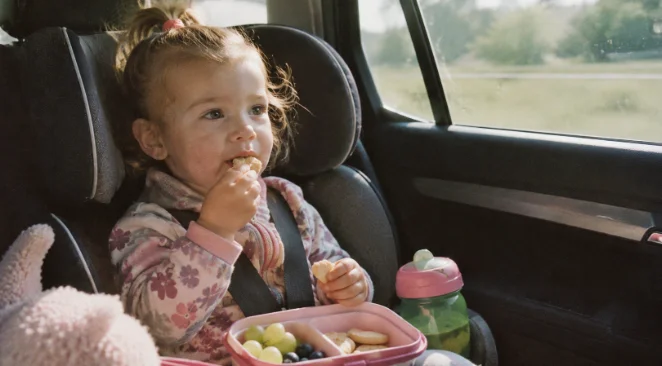
A two-hour drive to visit grandparents and a full day on the highway require very different approaches to feeding a toddler. Between unexpected traffic, missed naps and stretches of road with few places to stop, having the right food available can make travelling considerably easier.
The most practical road trip snacks for toddlers are familiar, easy to portion and suitable for their age and chewing abilities. Knowing when to serve them, how to keep them fresh and how much food to bring matters just as much as choosing the snacks themselves.
Plan Snack Stops Before You Pack the Food
Although it may seem convenient to hand your toddler a snack while driving, eating in a moving vehicle presents a choking risk. Health Canada advises against allowing young children to eat while travelling in a moving vehicle, partly because sudden stops and limited opportunities for immediate assistance can make choking particularly dangerous.
Plan to serve snacks when the vehicle is safely parked and your child can sit upright under direct adult supervision. A picnic area, highway service centre, roadside park or restaurant can provide a suitable opportunity to eat and take a break from the car seat.
When planning your route, look for places where your family can:
- Park safely away from moving traffic.
- Wash hands before eating.
- Sit comfortably while having a snack or meal.
- Use washroom facilities and change diapers if necessary.
- Allow children to stretch and move around before returning to the vehicle.
If you are travelling through rural areas or along northern highways, check the distance between available services before leaving. Seasonal closures and limited opening hours can make an apparently straightforward snack stop more difficult than expected.
Keep the itinerary flexible enough to accommodate your child’s hunger, thirst and need for breaks rather than treating the planned arrival time as a deadline.
How Much Food Should You Bring?
The amount of food you need depends on when you leave, how long you expect to travel and whether the journey overlaps with your child’s regular meals.
HealthLink BC recommends offering children aged one to three three small meals and two to three snacks, generally spaced about two to three hours apart. Individual appetites and eating routines will vary.
Rather than introducing an entirely different eating schedule on travel days, use your toddler’s usual snack routine as a starting point and adjust it around planned stops.
Short Trips of One to Two Hours
If your toddler has eaten breakfast shortly before departure and you expect to arrive before their next usual snack, you may not need a planned food stop.
Bring drinking water and one suitable backup snack in case traffic delays your arrival or your child becomes hungry earlier than expected.
A ripe banana, a sealed container of unsweetened applesauce or an age-appropriate packaged oat snack can be useful without requiring an entire cooler of food.
Half-Day Family Drives
A journey lasting three to five hours is more likely to overlap with a regular snack or meal. Plan at least one suitable eating stop, with additional breaks according to your child’s needs.
If you leave after breakfast, bring a morning snack and either arrange to stop for lunch or pack a meal that can be served safely along the way.
Keep one additional shelf-stable snack separate from the planned food. This provides some flexibility if a restaurant is closed, a nap changes your schedule or road construction adds time to the journey.
Full-Day Road Trips
For longer journeys, think in terms of a full day’s eating routine rather than simply bringing a large collection of snacks.
For example, a family leaving at 8 a.m. after breakfast might plan a morning snack around 10 a.m., lunch around noon and an afternoon snack later in the journey. These times are illustrative and should be adjusted around your child’s appetite and travel needs.
Bring a combination of fresh foods, suitable shelf-stable snacks and properly chilled meals. If the drive crosses several regions with limited food services, include enough additional food and drinking water to manage an unexpected delay.
Travel Snacks That Do Not Need a Cooler
Shelf-stable foods are particularly useful for short journeys, spontaneous family outings and longer drives where refrigerator access is uncertain.
The following options can work well when the ingredients, texture and storage instructions are appropriate for your child:
- Whole, unpeeled ripe bananas that can be prepared at the stop.
- Unopened cups of unsweetened applesauce.
- Soft, commercially packaged whole grain oat snacks.
- Age-appropriate whole grain crackers that are easy for your child to chew.
- Unopened shelf-stable fruit or vegetable purées.
- Soft whole grain bread served in manageable pieces.
- Plain muffins that are suitable for room-temperature storage.
- Unopened, shelf-stable pasteurized milk in individual containers, if appropriate for your child’s age and dietary needs.
Check packaging for storage instructions. A product that does not require refrigeration before opening may need to be chilled once opened. Individual containers can be particularly practical when you cannot safely store leftovers.
For children with food allergies, bring familiar products with clearly identified ingredients rather than relying on finding suitable alternatives at an unfamiliar service centre.
It is also worth distinguishing between a portable snack and a nutritionally varied snack. A few crackers may be convenient, but combining them with an appropriate fruit or protein food provides greater variety. Longer trips benefit from including more than grain-based packaged foods.
What to Pack in an Insulated Cooler
An insulated cooler gives you considerably more flexibility when preparing food for a family road trip. It allows you to bring familiar meals and snacks instead of depending entirely on shelf-stable products or roadside restaurants.
Suitable chilled snack combinations include:
- Plain yogurt with mashed banana or soft berries.
- Ripe pear slices with grated pasteurized cheese.
- Soft whole grain pita pieces with hummus.
- Cooked sweet potato with mashed chickpeas.
- Soft oatmeal squares with cottage cheese.
- Small pieces of a fully cooked egg sandwich.
- Soft pancakes with plain yogurt.
Prepare each food according to your child’s chewing and swallowing abilities, and account for any individual dietary restrictions.
Keeping Perishable Food at 4°C or Below
Health Canada recommends maintaining the temperature inside a food cooler at 4°C or below. Insulation alone is not enough to keep perishable food safe throughout a long journey.
Start with refrigerated food, add sufficient frozen ice packs and use a cooler thermometer to monitor the temperature. Place the cooler somewhere protected from direct sunlight and excessive heat.
For full-day trips, consider keeping frequently accessed drinks in a separate insulated bag. Opening the main food cooler repeatedly allows warmer air to enter and makes temperature control more difficult.
Health Canada’s food safety guidance for young children recommends limiting the time perishable food spends at room temperature to two hours, or one hour during summer outdoor activities. These limits include time spent preparing and serving the food outside refrigeration.
Discard perishable food if it has exceeded these limits or you cannot establish that it has been stored safely. Smell and appearance are not reliable indicators of food safety.
Packing Food in Small, Separate Portions
Instead of bringing a large container of yogurt or an entire package of prepared fruit, divide food into smaller portions before leaving.
This makes it easier to serve one snack without exposing the remaining food to warmer temperatures. It also reduces waste if your child eats less than expected.
Keep backup portions sealed and chilled until needed. Avoid returning partially eaten food or food contaminated with saliva to the main supply.
Labelling containers by eating occasion, such as morning snack, lunch and afternoon snack, can also make a roadside picnic easier to organise.
Summer Trips, Winter Drives and Cottage Weekends
Seasonal temperatures affect food storage, while the availability of services can influence how much backup food your family needs.
Keeping Food Cool on Hot Summer Days
A parked vehicle can become extremely warm, even when the outdoor temperature seems comfortable. Avoid leaving a food cooler in direct sunlight or in an overheated vehicle for extended periods.
When travelling to a campground, cottage or beach, consider how long the food will remain away from reliable refrigeration after you arrive. A three-hour drive followed by several hours outdoors requires a different cooling arrangement from a three-hour drive directly to a home refrigerator.
Bring enough ice packs for the entire outing, not just the driving portion. Keep drinking water accessible for breaks and encourage regular opportunities to drink, particularly during warm weather and outdoor activities.
Why a Cold Car Is Not a Reliable Refrigerator
Sub-zero outdoor temperatures do not guarantee that the food inside your vehicle will remain safely chilled.
Cabin heating, sunlight and temperature changes during stops can cause food to warm unexpectedly. Food stored in a cold trunk may also freeze, affecting its texture and making it unsuitable for immediate serving to a toddler.
Continue using a properly packed cooler and thermometer for perishable foods during winter trips.
Canadian Automobile Association winter travel guidance also encourages drivers to carry emergency supplies. When travelling with young children, include suitable non-perishable food and drinking water as part of your winter preparedness kit, separate from the snacks intended for the planned journey.
Three Sample Travel Snack Kits
These examples illustrate how to adjust your food supply according to the length of the journey. They are not prescribed serving sizes or nutritional requirements.
| Trip length | Example snack kit | Storage approach |
|---|---|---|
| 1–2 hours | Ripe banana, sealed applesauce cup and drinking water | Small bag; serve during a stop if needed |
| 3–5 hours | Soft oat muffin, plain yogurt, ripe pear, suitable crackers and a backup snack | Insulated lunch bag with ice packs and a thermometer |
| 6–10 hours | Soft breakfast muffin, fruit, yogurt, packed lunch, grated cheese, suitable whole grain snacks and additional food for delays | Well-packed cooler, separate shelf-stable reserve and sufficient drinking water |
If you are planning to purchase lunch along the way, the full-day kit can be adjusted accordingly. However, keeping at least one additional familiar food option is useful when your child does not enjoy the available restaurant choices.
Common Road Trip Snack Mistakes
One of the most common planning mistakes is choosing food primarily because it is convenient to hand to a child in the back seat. Easy-to-pack food must still be appropriate for supervised eating.
HealthLink BC and SickKids identify several foods and textures that can pose choking hazards for young children. Whole grapes, popcorn, whole nuts, hard candies and large pieces of firm food are unsuitable choices for toddlers.
Other mistakes to avoid include:
- Leaving food preparation until the stop: Prepare firm fruit and vegetables in age-appropriate forms at home where possible. Cut grapes lengthwise into quarters and cook or grate hard produce as necessary.
- Packing only sweet snacks: Include a variety of suitable foods, including protein-rich options, particularly when travelling for several hours.
- Using food to manage boredom: Bring books, conversation games and other age-appropriate activities instead of relying on continuous snacking.
- Introducing unfamiliar foods during the journey: Familiar foods are easier to plan around, especially when managing allergies or texture preferences.
- Assuming an insulated bag stays cold all day: Monitor the actual temperature rather than estimating how much cooling capacity remains.
- Bringing oversized portions: Offer manageable amounts and allow your child to decide how much to eat.
Children should eat while seated upright and supervised. Even familiar foods can become choking hazards when a child is distracted, moving around or attempting to eat too quickly.
A Simple Packing List for Your Next Family Trip
Keeping a dedicated collection of travel feeding supplies at home can make packing easier, especially for spontaneous weekend trips.
- Age-appropriate snacks for planned eating stops.
- Additional shelf-stable food for unexpected delays.
- Drinking water and your child’s usual cup.
- An insulated cooler or lunch bag.
- Frozen ice packs and a cooler thermometer.
- Small reusable food containers.
- Child-sized spoons and other necessary utensils.
- Napkins and supplies for washing hands.
- A separate bag for rubbish and used containers.
- Original ingredient information for packaged foods when managing allergies.
Pack the food bag where an adult can reach it easily once the vehicle is parked, rather than underneath several suitcases in the trunk.
Travelling with a toddler rarely follows an exact timetable, but snack preparation does not need to be complicated. A few familiar foods, reliable cold storage and well-planned opportunities to stop and eat can make a long journey feel much more manageable for everyone in the family.
Leave a Reply