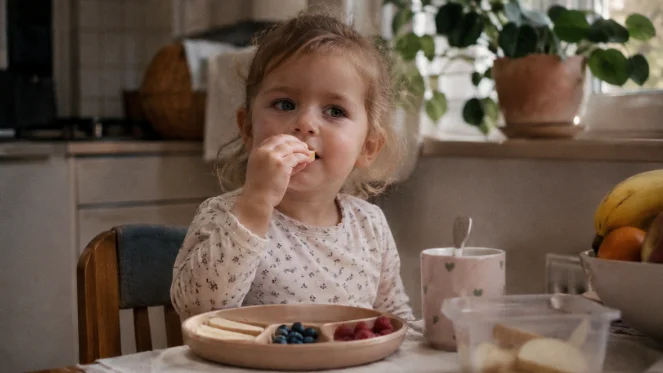
A toddler who barely touches breakfast may be ready for another meal by mid-morning, while a child who eats a substantial lunch might show little interest in an afternoon snack. These changes in appetite are a normal part of early childhood, but they can make planning food surprisingly complicated.
Healthy snacks for toddlers do not need to involve special recipes, expensive ingredients or perfectly arranged lunch boxes. A flexible eating routine, a variety of familiar foods and a little preparation can help you provide nutritious options that fit your child’s needs and your family’s everyday schedule.
Why Snacks Matter in a Toddler’s Daily Eating Routine
Snacks play a different role in a toddler’s diet than they do in an adult’s. Young children have relatively small stomachs but considerable energy and nutrient needs as they grow, explore their surroundings and become more physically active.
Regular eating opportunities allow children to meet those needs without having to consume large amounts of food at breakfast, lunch or dinner.
Small Appetites and Regular Eating Opportunities
A snack can provide nutrients that were missing from an earlier meal. A child who ate toast at breakfast might enjoy yogurt and fruit later in the morning, while a toddler who left most of their lunch untouched may appreciate an afternoon snack containing a more substantial combination of foods.
Rather than viewing snacks as treats or rewards, think of them as smaller eating occasions that contribute to the overall diet. This also makes it easier to offer vegetables, protein foods and whole grains outside traditional mealtimes.
How Toddler Nutrition Differs from Adult Nutrition
Canada’s Food Guide provides general dietary recommendations for people aged two and older. Children between 12 and 24 months have additional nutritional considerations addressed in Health Canada’s infant and young child feeding guidance.
During this period, adequate dietary fat, energy and iron are particularly important. Choosing reduced-fat products or trying to minimise calories simply because those choices might suit an adult is not necessarily appropriate for a growing toddler.
Foods such as eggs, soft lentils, iron-fortified cereals, pasteurized full-fat yogurt and safely prepared nut or seed butters can help provide important nutrients within a varied diet.
What Makes a Balanced Toddler Snack?
A balanced toddler snack usually contains foods that complement one another. Combining fruit with yogurt, for example, provides a different mix of nutrients than offering fruit alone.
The Canadian Paediatric Society encourages combining foods from at least two food groups when planning children’s snacks. This is a useful starting point rather than a requirement that every eating occasion must follow a rigid formula.
Combining Different Types of Food
Keep three broad categories in mind when deciding what to serve:
- Vegetables and fruits: Soft pears, bananas, unsweetened applesauce, mashed berries, cooked carrots and other vegetables prepared to an appropriate texture.
- Protein foods: Plain yogurt, pasteurized cheese, fully cooked eggs, hummus, mashed beans, lentils, tofu and thinly spread smooth nut or seed butters.
- Whole grain foods: Oatmeal, soft whole grain bread, homemade oat muffins and suitable whole grain crackers.
You do not need to include all three categories every time. A smaller snack might consist of two foods, while a more substantial snack can include several ingredients when your child has a longer wait until their next meal.
Think beyond familiar snack products. Leftover cooked sweet potato, a small portion of lentils or some soft vegetables from dinner can be just as suitable as food specifically marketed for toddlers.
Snack Combinations That Are Easy to Remember
Keeping a few dependable combinations in mind makes it easier to prepare food without constantly searching for new recipes.
- Plain yogurt with mashed ripe banana.
- Soft whole grain toast with a thin layer of smooth peanut butter.
- Cooked sweet potato with mashed chickpeas.
- Soft pear slices with grated cheese.
- Unsweetened applesauce with a soft oat muffin.
- Fully cooked scrambled egg with soft whole grain bread.
- Soft pita pieces with hummus.
- Iron-fortified oatmeal with mashed berries.
Plant-based sources of iron, such as lentils and beans, can be paired with vitamin C-rich foods to support iron absorption. Soft cooked broccoli, mashed strawberries or other appropriately prepared fruits and vegetables can complement these foods.
All combinations should be adapted to your child’s developmental abilities, allergies and individual dietary requirements.
How Often Should Toddlers Have Snacks?
For many children aged one to three, three small meals and two or three snacks provide a manageable daily eating pattern. HealthLink BC suggests spacing these eating opportunities approximately two to three hours apart.
That does not mean every family needs to follow the same timetable. Wake-up times, daycare arrangements, naps and family meals naturally influence when children are ready to eat.
Building a Predictable but Flexible Eating Schedule
A predictable routine helps children become familiar with the rhythm of meals and snacks. It also gives them opportunities to recognise feelings of hunger and fullness rather than eating continuously throughout the day.
The following schedule is an illustrative example for a toddler who wakes in the morning and has dinner in the early evening.
| Time | Eating opportunity | Example |
|---|---|---|
| 7:30 a.m. | Breakfast | Oatmeal, fruit and plain milk as appropriate for age |
| 10:00 a.m. | Morning snack | Plain yogurt and soft fruit |
| 12:00 p.m. | Lunch | Soft vegetables, grains and protein foods |
| 3:00 p.m. | Afternoon snack | Soft pita pieces and hummus |
| 5:30 p.m. | Dinner | Age-appropriate portions of the family meal |
An additional evening snack may suit children who have an early dinner and a later bedtime. Children who are breastfeeding may also continue nursing according to their individual needs.
Offer water regularly throughout the day. Plain milk, where appropriate, can be served with meals and snacks. Juice and sweetened drinks are unnecessary for meeting a toddler’s everyday hydration needs.
What to Do When Your Toddler Is Hungry Between Meals
A regular schedule should provide structure, not prevent a genuinely hungry child from eating.
If lunch is still an hour away and your toddler is clearly hungry, bringing the planned snack forward may be more practical than insisting they wait. If dinner is nearly ready, serving the meal slightly earlier might work better.
When hunger repeatedly occurs at the same unexpected time, consider adjusting the previous eating opportunity or the daily schedule. Offer food without pressure and allow your child to decide whether and how much to eat.
Healthy Snack Ideas for Different Parts of the Day
The most useful snack depends partly on what happens before and after it. A morning snack following a light breakfast may need to be more substantial than something offered shortly before dinner.
Quick Morning Snacks
Mornings are often busy, particularly when parents are preparing for work and children need to leave for daycare. Foods that require little assembly can be more sustainable than recipes that involve cooking from scratch every day.
Try the following combinations:
- Plain yogurt with mashed banana and soft cooked oats.
- Soft whole grain toast with mashed avocado.
- A homemade banana oat muffin with plain milk, as appropriate for age.
- Fully cooked scrambled egg with soft fruit.
- Unsweetened applesauce with an age-appropriate whole grain snack.
- Soft pancakes prepared in advance and served with yogurt.
If your child regularly eats very little at breakfast, consider offering a more substantial morning snack that includes a source of protein, fat or iron rather than relying solely on fruit.
Afternoon Snacks Before Dinner
The afternoon can be a challenging time for families. Children may be tired after daycare, hungry following outdoor activities or simply ready to eat before dinner is prepared.
If there is still a considerable gap before the evening meal, a combination such as hummus and soft pita or yogurt and fruit can provide a useful eating opportunity.
Other suitable ideas include grated cheese with soft pear slices, mashed white beans on toast, cooked vegetables with a smooth dip, or a small portion of leftover lentil stew.
When dinner is approaching, start with a smaller amount and offer more if your child remains hungry. There is no need to deliberately keep a hungry child from eating simply to encourage a larger dinner.
A repeated preference for the same afternoon snack is not necessarily a problem. Familiarity can be reassuring, especially after a busy day, and variety can be introduced gradually at other eating occasions.
Snacks for Outings and Busy Days
Food for the playground, a family appointment or a morning of errands needs to be easy to transport as well as nutritious.
An unpeeled ripe banana, an unopened applesauce cup or a suitable shelf-stable whole grain snack can be convenient when refrigeration is unavailable.
For longer outings, an insulated bag with ice packs allows you to bring yogurt, cheese, prepared fruit and other foods requiring refrigeration.
Pack a little extra when your schedule is uncertain, but avoid filling the bag with so many options that most of the food returns home uneaten. One familiar combination and a shelf-stable backup will often be enough for a short outing.
Homemade vs. Store-Bought Toddler Snacks
Homemade and commercially prepared snacks can both have a place in family life. The most practical choice depends on ingredients, preparation time, storage requirements and how the food will be served.
| Consideration | Homemade snacks | Store-bought snacks |
|---|---|---|
| Preparation time | Depends on the recipe and batch size | Often ready to serve |
| Ingredient control | Direct control over ingredients and preparation | Requires careful label reading |
| Portability | Depends on preparation and packaging | Often convenient for outings |
| Storage life | Often shorter unless frozen | Varies according to the product |
| Cost per serving | Depends on ingredients, yield and food waste | Depends on package size and price |
When Homemade Snacks Make Sense
Preparing food at home is particularly useful when you already have suitable ingredients available. Overripe bananas can become soft muffins, extra cooked lentils can be mashed into a spread, and leftover roasted vegetables can be served as part of the next day’s snack.
Batch preparation also makes it easier to adjust ingredients and textures to your child’s preferences. Freezing individual portions can reduce the need to prepare the same recipe repeatedly.
When Packaged Snacks Can Be Useful
Commercially prepared snacks can be especially helpful during travel, busy workdays and situations where cooking facilities are unavailable.
They may also be practical when a child care centre requires original packaging so staff can review allergen information.
Look for products that suit your child’s age and dietary needs rather than assuming that all foods marketed for toddlers are nutritionally equivalent. Packaged cookies and snack bars can be occasional convenient options, while everyday snacks should offer a broader variety of nutrient-rich foods.
Choosing Organic and Packaged Snacks
Claims such as organic, whole grain and no added sugar can help narrow down your choices, but each describes a specific aspect of the product. None provides a complete assessment of nutritional quality.
What Organic Certification Can Tell You
The Canada Organic Logo identifies products that meet applicable Canadian organic certification requirements and contain at least 95% organic content.
For families who prioritise particular agricultural and production practices, organic certification can be a useful purchasing consideration. However, organic ingredients do not automatically make a snack lower in sugar, higher in fibre or more suitable for a toddler.
An organic oat cookie and a conventional oat cookie may have similar nutritional profiles. Comparing their ingredients and Nutrition Facts tables is more informative than relying on certification alone.
Looking Beyond Front-of-Package Claims
When comparing packaged toddler snacks, examine the main ingredients, serving size, nutrient amounts and relevant allergen statements.
Canada’s front-of-package nutrition labelling compliance deadline was January 1, 2026. Many prepackaged products that meet specified thresholds for sugars, sodium or saturated fat must now display a nutrition symbol identifying those nutrients.
Certain foods and products are exempt, and packaging from before the compliance deadline may remain in circulation. The absence of a symbol does not necessarily mean a product is nutritionally preferable.
Knowing how to read toddler snack labels makes it easier to compare products that look similar but contain different ingredients.
Pay particular attention to age-specific nutritional needs rather than automatically applying adult dietary targets to young children.
Planning Snacks Away from Home
Snack planning becomes slightly more complicated when someone else is supervising your child or when food needs to remain fresh away from the refrigerator.
Preparing for these situations in advance can help you avoid rushed purchases and unnecessary changes to familiar eating routines.
Snacks for Daycare and Preschool
Child care centres across Canada operate under provincial or territorial requirements and may establish their own food policies. Some provide all meals and snacks, while others ask parents to pack food from home.
Before preparing snacks, confirm whether the centre has restrictions involving peanuts, tree nuts, sesame or other allergens. Ask whether homemade food is accepted and whether refrigeration is available.
If your child’s centre restricts certain ingredients, these nut-free snack ideas for daycare can help you plan around its food policy.
Choose containers that are manageable for your child and clearly label them. If the centre requires ingredient information, retain the original packaging of commercially prepared foods.
Snacks for Family Trips and Outdoor Activities
Short outings may require little more than drinking water and one suitable backup snack. Longer journeys call for planned eating opportunities, additional food and appropriate cold storage.
Longer outings require a little more preparation, particularly when packing snacks for a road trip with toddlers.
Serve food while your child is seated upright and directly supervised. Avoid feeding young children in moving vehicles or while they are running around a playground.
Perishable foods should remain at 4°C or below, using an insulated cooler and sufficient ice packs when refrigeration is unavailable.
Keeping Snack Costs Manageable
Buying nutritious food for toddlers does not necessarily require a separate collection of products intended exclusively for children. Many everyday ingredients can be adapted to suit young children and used throughout the family’s weekly meals.
Buying Ingredients That Work Across Several Meals
Versatile ingredients help reduce both preparation time and food waste.
Oats can be used for breakfast porridge, soft muffins and pancakes. Plain yogurt can accompany fruit, form the basis of a dip or be used in family recipes. Lentils can appear in soups, stews and smooth spreads.
Fresh seasonal produce can be useful when prices are favourable, while frozen vegetables and fruit offer an alternative when fresh options are expensive or likely to spoil before they are eaten. Prepare them according to package directions and your child’s developmental needs.
Canned beans with little or no added sodium are another convenient option. Drain, rinse and mash them to a suitable texture before serving.
Comparing Cost per Serving Instead of Package Price
The cheapest package is not necessarily the least expensive option over several eating occasions.
Consider two hypothetical packages of suitable oat snacks. One contains 150 g and costs C$3.50, while another contains 400 g and costs C$6.00.
Using an equivalent 25 g quantity for comparison, the smaller package costs approximately C$0.58 per portion, while the larger package costs C$0.38. However, if your family consumes only half of the larger package before the rest goes to waste, its effective cost rises to C$0.75 per consumed portion.
These figures are illustrative rather than current retail prices, and the comparison quantity is not a recommended toddler serving size.
Snack costs are easier to manage when they are considered alongside the rest of your food shopping, which is why building a realistic family grocery budget can make weekly planning more predictable.
Preparing a Week of Snacks Without Spending Sunday in the Kitchen
Planning ahead does not mean preparing fourteen individual snacks every weekend. A more manageable approach is to keep a small collection of versatile ingredients available and combine them as needed.
Choose a Small Rotation of Ingredients
Start with two or three fruits or vegetables, a few protein foods and one or two grain-based ingredients that your family already enjoys.
For example, a weekly shopping list might include bananas, pears, frozen berries, plain yogurt, eggs, chickpeas, oats and whole grain bread.
Those ingredients can form a seven-day snack rotation without requiring a different shopping list for every recipe:
- Monday: Soft banana oat muffin and plain yogurt.
- Tuesday: Ripe pear slices and fully cooked scrambled egg.
- Wednesday: Soft oatmeal with mashed, appropriately prepared berries.
- Thursday: Whole grain toast with mashed chickpeas.
- Friday: Plain yogurt with mashed banana.
- Saturday: Soft pancakes and ripe pear.
- Sunday: Soft whole grain bread with a thin layer of suitable smooth nut or seed butter.
This example can be adjusted around allergies, daycare restrictions, family preferences and the other foods served throughout the week. Additional daily snacks can be assembled from the same ingredients.
Prepare What Keeps Well and Leave the Rest Until Later
Muffins, pancakes and some cooked ingredients can be prepared in batches and frozen in individual portions. Fresh fruit and yogurt generally require less advance preparation and can be assembled closer to serving time.
Health Canada advises consuming refrigerated leftovers within two to three days or freezing them for later use. Preparing an entire week’s supply of perishable cooked snacks and keeping everything in the refrigerator is therefore not a reliable approach.
A practical routine is to prepare a small batch at the beginning of the week, freeze extra portions and replenish fresh ingredients around midweek. Thaw frozen food safely in the refrigerator and follow appropriate storage guidance for each product.
Leave cutting, grating and mashing until reasonably close to serving when doing so helps maintain food quality and an appropriate texture.
Adapting Snacks to Your Child, Not the Other Way Around
Two toddlers of the same age may have very different appetites, food preferences and chewing abilities. A snack that suits one child may require considerable adjustment before it is appropriate for another.
HealthLink BC recommends preparing food in ways that reduce choking risks. This is particularly relevant for children younger than four, who may have difficulty managing hard, round or sticky foods.
Follow these practical precautions:
- Cut grapes and cherry tomatoes lengthwise into quarters or smaller suitable pieces.
- Cook or grate hard fruits and vegetables.
- Grate firm cheese instead of serving large cubes.
- Spread smooth nut and seed butters thinly rather than offering spoonfuls.
- Avoid whole or chopped nuts, popcorn, hard candies and similar choking hazards.
- Ensure your child is seated upright and supervised throughout eating.
Food allergies require individual consideration. Current Canadian Paediatric Society guidance supports introducing common food allergens during infancy in developmentally appropriate forms rather than routinely delaying their introduction. Children with diagnosed or suspected allergies may require a personalised approach under medical guidance.
Do not assume that a daycare’s restrictions require the same foods to be excluded from your child’s diet at home unless individual medical advice indicates otherwise.
Occasional changes in appetite and temporary food preferences are common. However, persistent difficulty swallowing, repeated coughing during meals, concerns about growth, very limited food variety or suspected nutrient deficiencies warrant discussion with a healthcare provider or registered dietitian.
A manageable snack routine begins with choosing familiar, nutritious ingredients, combining them in simple ways and offering them at regular opportunities without pressure. Adjust portions according to appetite, prepare food safely and keep convenient alternatives available for days that do not go according to plan.
Children do not need a different snack recipe every afternoon or a cupboard filled with specialised products. What matters more is the variety of foods available over time, the opportunity to develop comfortable eating habits and a routine that works for the whole family.
Leave a Reply